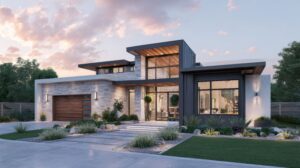
Designing a home is often thought of as a quick step before construction begins.
In reality, the design phase is a structured process involving planning, coordination, and approvals. The time required depends not only on the complexity of the home, but also on how prepared the project is at the outset.
Understanding the full design timeline helps set realistic expectations—and allows projects to move forward with clarity rather than delay.
PROJECT PLANNING CONSIDERATIONS
- Project type (custom vs. spec)
- Site constraints and zoning requirements
- Client decision timelines and revisions
- Consultant coordination requirements
- Municipal approval timelines
PROJECT TYPE: CUSTOM VS. SPEC
The timeline for design is influenced heavily by the type of project.
Custom Homes
- Designed specifically for the homeowner
- Require more iterations and refinement
- Involve deeper coordination and personalization
Spec Homes
- Based on pre-defined layouts and design strategies
- Typically move faster through the design process
Key Decision at This Stage:
- Whether the project requires full customization or a more streamlined design approach
PHASE 1 — INITIAL DISCOVERY & PROJECT SETUP
Estimated Time: 1–2 Weeks
This phase establishes the foundation for the entire project.
Key Steps
- Define project goals, expectations, and scope
- Review inspiration and initial ideas
- Establish overall direction for design
Required Documentation
Before design begins, essential documents must be gathered:
- Property survey
- Lot grading information (if applicable)
- Legal lot layout
- Design guidelines or restrictions
- Title review (right of way, covenants, easements)
Incomplete information at this stage is one of the most common causes of delay later in the process.
PHASE 2 — CONCEPTUAL DESIGN
Estimated Time: 1–3 Weeks
This phase explores what is possible on the site.
Key Components
- Zoning analysis (FSR, setbacks, height limits)
- Site planning and building placement
- Initial floor plan concepts
The goal is to test feasibility and establish a clear design direction.
Key Decisions at This Stage:
- Whether the layout aligns with zoning and site conditions
- Whether the design direction meets functional goals
PHASE 3 — DESIGN DEVELOPMENT & EXTERIOR DESIGN
Estimated Time: 2–4 Weeks
The concept design is refined into a coordinated and functional plan.
Key Components
- Floor plan revisions and optimization
- Exterior form and architectural expression
- Material selection and design direction
- Functional review of all spaces
This phase ensures the design is both practical and aligned with the project vision.
PHASE 4 — CONSULTANT COORDINATION
Estimated Time: 1–3 Weeks
To move toward permitting, the design must be coordinated with technical consultants.
Typical Consultants
- Structural engineer
- Civil engineer (if required)
- Geotechnical engineer
- Arborist
- Surveyor
- Energy advisor
Deliverables
Consultant drawings include:
- Structural systems
- Site servicing and grading
- Technical specifications for approval
Coordination at this stage ensures the project is technically viable.
PHASE 5 — PERMIT DRAWINGS & APPROVALS
Estimated Time: 4–12 Weeks
The final design is compiled into a permit-ready drawing set.
Typical Drawing Set Includes
- Site plan
- Floor plans
- Elevations
- Sections
- Construction details
Requirements
Drawings must meet:
- Zoning regulations
- Building code requirements
- Consultant coordination standards
Optional additions may include:
- 3D renderings
- Door and window schedules
Municipal review timelines vary significantly depending on the project and jurisdiction.
TOTAL ESTIMATED TIMELINE
| Phase | Timeframe |
| Initial Discovery & Setup | 1–2 Weeks |
| Document Collection | 1–2 Weeks |
| Conceptual Design | 1–3 Weeks |
| Design Development | 2–4 Weeks |
| Consultant Coordination | 1–3 Weeks |
| Permit Drawings & Approvals | 4–12 Weeks |
Total Estimated Duration:
Approximately 3–7 Months
COMMON CAUSES OF DELAY
Most delays are not caused by design complexity—but by process gaps.
The Issue
- Missing documents
- Late-stage changes
- Slow decision-making
- Extended municipal review timelines
The Better Approach
- Gather all documentation early
- Align expectations before design begins
- Maintain consistent communication throughout
WHERE THIS MATTERS MOST
Timeline clarity is especially important in:
- Custom homes with detailed design requirements
- Projects with fixed construction start dates
- Properties with zoning or environmental constraints
- Multi-phase or consultant-heavy projects
CONCLUSION
The design phase is not simply a preliminary step—it is the foundation of the entire project.
Time invested in clear planning, coordination, and decision-making at this stage directly impacts how efficiently a project moves through approvals and into construction.
Projects that begin with clarity are more likely to stay on schedule, avoid unnecessary revisions, and achieve stronger long-term outcomes.