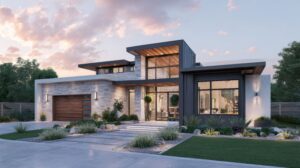
The number of suites you can build is not simply a design decision—it is determined by zoning, bylaws, and how your property is planned from the start.
Understanding these constraints early allows you to design a property that is both compliant and optimized for long-term return.
Section 1 — Why Rental Suites Are a Strategic Decision
A well-designed suite is not just additional space. It is a financial and planning tool.
What It Enables:
- Consistent monthly income to offset mortgage or expenses
- Flexible living arrangements (family, tenants, future use)
- Increased resale value through income potential
- Better use of existing land and built space
In most cases, the value of a property is not just in the home—it is in how efficiently the property is used.
Section 2 — The Two Types of Rental Suites
Understanding this distinction is critical because each type is governed differently.
Internal Suites (Secondary Suites)
Located within the main home:
- Basement suites
- Walk-out suites
- In-law or nanny suites
- Garage conversions
Advantages:
- Lower construction cost
- Faster approvals (typically interior scope)
- Uses existing structure
Limitations:
- Strict fire separation requirements
- Soundproofing considerations
- Usually limited to one per home
Detached Suites (ADUs)
Separate structures on the same property:
- Laneway homes
- Garden suites
- Coach houses
Advantages:
- Full privacy for occupants
- Higher rental potential
- Greater long-term flexibility
Limitations:
- Higher construction cost
- Utility and servicing requirements
- More complex approvals
Section 3 — How Many Suites Are You Actually Allowed?
This is where most projects are either optimized—or limited.
Typical Allowances (Varies by City)
In the Lower Mainland, most properties allow:
- 1 Secondary Suite (internal)
- 1 Detached ADU (laneway or garden suite)
In addition:
- Duplexes and multiplex zoning can significantly increase unit count
- New SSMUH policies (Small-Scale Multi-Unit Housing) may allow 3–6 units depending on lot and location
Important:
The number of suites is not just a zoning question.
It depends on:
- Lot size and dimensions
- Setbacks and site coverage
- Parking requirements
- Servicing capacity
- Municipal overlays and policy updates
Section 4 — Core Requirements That Control Your Design
These are the constraints that shape every successful suite project.
Fire & Safety Requirements
- 45–60 minute fire separation between units
- Fire-rated assemblies (Type X drywall, double layers where required)
- Proper egress windows and exits
- Separate ventilation systems
Parking Requirements
- Typically 1 space per unit (varies by municipality)
- Relaxations possible near transit (project-specific)
Utilities & Servicing
- Electrical capacity upgrades often required
- Plumbing separation and shutoffs recommended
- Separate meters may be required depending on project
Section 5 — Cost vs Return: What to Expect
Secondary Suites
- Lower cost due to existing structure
- Faster approvals
- Faster return on investment
Best for: homeowners prioritizing speed and efficiency
Detached ADUs
- Higher upfront cost
- Longer approvals
- Higher rental income and long-term value
Best for: long-term investors and multi-generational planning
Section 6 — Design Decisions That Impact Success
Most suite projects fail at the design stage—not the build stage.
1. Light and Livability
- Basement suites must include proper window sizing
- Natural light directly affects rental value
2. Privacy Planning
- Separate entrances are essential
- Layout separation prevents overlap between occupants
3. Sound Control
- Floor assemblies must be designed intentionally
- Acoustic insulation and resilient channels are standard
4. Site Access (Critical for ADUs)
- Limited access increases construction cost significantly
- Backyard layout affects feasibility more than most expect
Section 7 — Approval Timeline (Realistic Expectations)
Typical timelines:
- Secondary Suite: ~4–12 weeks
- Detached ADU: ~3–6+ months
Delays are usually caused by:
- Incomplete applications
- Zoning misunderstandings
- Lack of coordination between consultants
Section 8 — The Fastest Path to Approval
Projects that move quickly follow a clear structure:
- Confirm zoning and allowable unit count
- Define a clear project strategy (not just “add a suite”)
- Design with compliance in mind from the start
- Submit a complete application package
- Coordinate consultants early
Speed comes from clarity—not shortcuts.
Section 9 — Final Decision Framework
Add a Suite If:
- You want to increase property income
- You are planning long-term ownership
- Your lot supports additional density
Reconsider If:
- Zoning is unclear or restrictive
- Budget does not support full compliance
- The design compromises livability
Conclusion
The number of rental suites you can build is not a simple answer—it is a coordinated outcome between zoning, design, and execution.When approached correctly, a rental suite is not just an addition.
It is a structured way to increase the performance of your property.