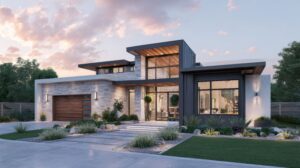
Building a home is often presented as a straightforward process—design, permits, and construction.
In reality, projects are shaped by variables that are not always visible at the outset. Budget shifts, site conditions, regulatory changes, and coordination challenges can all influence timelines, costs, and outcomes.
Understanding these factors early does not make a project more complicated—it makes it more controlled.
This article outlines the most common challenges in residential construction and how to approach them with clarity from the beginning.
PROJECT PLANNING CONSIDERATIONS
- Budget variability and cost escalation
- Site conditions and environmental factors
- Municipal approvals and regulatory changes
- Team coordination and decision alignment
- Construction sequencing and unforeseen conditions
BUDGET VARIABILITY: COSTS ARE NOT STATIC
Even with a well-defined budget, construction costs can shift over time.
Common Causes
- Material availability and substitutions
- Labor availability and scheduling constraints
- Additional consultants required during design
- Market-driven cost increases
These factors are often outside the control of a single party but directly affect the project.
Key Decisions at This Stage:
- Whether sufficient contingency is built into the budget
- Whether design scope aligns with financial capacity
Recommended Approach
Maintain a contingency allowance of approximately 10–15% to absorb unexpected cost changes.
ENVIRONMENTAL FACTORS: TIMELINES ARE NOT FIXED
Construction timelines are influenced by conditions beyond planning and scheduling.
Common Impacts
- Weather delays (rain, snow, extreme heat)
- Soil conditions affecting excavation and foundations
- Seasonal limitations on certain construction activities
These factors can pause or slow progress, even in well-managed projects.
Key Decisions at This Stage:
- When to begin construction based on seasonal conditions
- Whether timeline expectations are realistic
REGULATORY ENVIRONMENT: RULES CAN SHIFT
Municipal and regional regulations define what can be built—and how.
Key Considerations
- Zoning may not allow the intended design
- Regulations can change over time
- Provincial or regional policies may override local bylaws
These changes can impact both design and approvals.
Key Decisions at This Stage:
- Whether the project aligns fully with current zoning
- Whether flexibility is required to adapt to potential changes
PROJECT COORDINATION: MULTIPLE PARTIES, DIFFERENT PRIORITIES
A residential project involves multiple stakeholders:
- Designers
- Consultants
- Contractors
- Trades
Each has a different role and perspective.
Common Challenges
- Misalignment in expectations
- Timing gaps between trades
- Responsibility for changes or corrections
- Communication breakdowns
Without clear coordination, small issues can escalate.
Key Decisions at This Stage:
- Who is responsible for overall project coordination
- How communication is structured across the team
MUNICIPAL PROCESSES: APPROVAL TIMELINES VARY
Permitting and inspections are required at multiple stages.
Common Factors
- Plan reviewers may interpret regulations differently
- Staff changes can affect continuity
- Approval timelines may extend beyond expectations
Even well-prepared submissions can experience delays.
Key Decisions at This Stage:
- Whether timeline assumptions include approval variability
- Whether proactive follow-up is built into the process
UNFORESEEN SITE CONDITIONS: WHAT’S BELOW THE SURFACE
Excavation can reveal conditions not visible during initial planning.
Common Discoveries
- Buried structures (pools, tanks, foundations)
- Utility routing challenges
- Soil conditions requiring redesign
These issues can introduce both cost and time implications.
Key Decisions at This Stage:
- Whether sufficient due diligence is completed before excavation
- Whether contingency planning accounts for unknown conditions
NEIGHBOR AND SITE CONTEXT FACTORS
Construction takes place within an existing environment.
Potential Challenges
- Neighbor concerns or complaints
- Site security issues
- Unauthorized access or dumping
These factors can disrupt construction if not managed early.
Key Decisions at This Stage:
- Whether communication with neighbors is proactive
- Whether site management and security are addressed
COMMON PLANNING MISTAKES
Many challenges arise not from the build itself, but from how the project is approached early.
The Issue
Projects are often planned with fixed expectations around cost, timeline, and conditions.
The Better Approach
- Expect variability and plan accordingly
- Build flexibility into both budget and timeline
- Coordinate all parties early in the process
WHERE THIS MATTERS MOST
These considerations are especially important in:
- Custom homes with complex design requirements
- Projects in urban areas with regulatory constraints
- Sites with unknown or variable conditions
- Projects with tight timelines or financial limits
CONCLUSION
Building a home is not defined by a single phase—it is shaped by a series of decisions made under changing conditions.
Projects that anticipate variability in cost, approvals, site conditions, and coordination are better positioned to move forward with clarity and control.
Understanding these factors early does not eliminate challenges—but it ensures they are managed rather than unexpected.