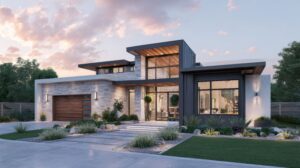
Building a house is often approached as a sequence of construction steps.
In practice, the outcome of a project is determined much earlier—through decisions about land, zoning, budget, and the team assembled to guide it. Without clarity at these early stages, projects tend to become reactive, leading to redesign, delays, and cost escalation.
This guide outlines the full process of building a home from the ground up, with a focus on the decisions that shape successful projects in Vancouver and the Lower Mainland.
PROJECT PLANNING CONSIDERATIONS
- Land constraints and zoning permissions
- Budget definition and cost expectations
- Consultant coordination and team structure
- Permit approvals and municipal requirements
- Construction sequencing and execution strategy
STEP 1 — LAND: DEFINING WHAT IS POSSIBLE
The starting point of any project is not the design—it is the land itself.
Before developing plans, it is essential to understand what the property allows and what constraints exist.
Zoning Regulations
Zoning determines:
- What type of building is permitted
- How large it can be
- How it can be used
Legal and Site Constraints
Properties may also be affected by:
- Right of way access
- Easements for utilities
- Restrictive covenants
- Environmental setbacks
These conditions often define the true buildable area of a site.
Key Decisions at This Stage:
- Whether the property supports your intended project
- Whether zoning aligns with your long-term goals
- Whether constraints reduce usable land more than expected
STEP 2 — COST PLANNING: DEFINING YOUR REAL BUDGET
Cost planning establishes the boundaries of what is realistically achievable.
A common mistake is beginning design without a clear understanding of construction cost expectations.
Establishing Baseline Costs
- Speak with local builders to understand current market conditions
- Use multiple sources to confirm general cost ranges
- Treat online estimates as directional, not definitive
Typical Cost Context (Vancouver / Lower Mainland)
Mid-range construction commonly falls within a range of approximately $250–$350 per square foot, depending on design complexity and specifications.
Financing Considerations
- Early discussions with lenders help define realistic scope
- Budget clarity prevents over-design and later revisions
Key Decisions at This Stage:
- What level of finish and complexity aligns with budget
- Whether scope needs to be adjusted before design begins
STEP 3 — ASSEMBLING THE RIGHT TEAM
Building a home is a coordinated process involving multiple specialists.
The quality of the team—and how early they are involved—directly impacts the efficiency and outcome of the project.
Core Consultants Include:
- Surveyor
Establishes property boundaries, elevations, and legal site conditions - Designer / Architect
Leads design development and coordinates all project consultants - Structural Engineer
Designs the structural system to ensure safety and long-term stability - Geotechnical Engineer
Evaluates soil conditions and defines foundation requirements - Arborist
Assesses trees and navigates municipal tree protection bylaws - Energy Consultant
Guides building performance, insulation, and system efficiency - Interior Designer
Aligns interior layouts, materials, and finishes with architectural intent - Builder / General Contractor
Coordinates construction execution, trades, and sequencing
Key Decisions at This Stage:
- Who leads the project and how coordination is structured
- Whether consultants are engaged early enough to influence design
STEP 4 — PERMITS AND APPROVALS
Before construction begins, the project must be reviewed and approved by municipal authorities.
This process ensures that the design complies with zoning, building codes, and local regulations.
Typical Departments Involved:
- Engineering (services and site grading)
- Parks and Trees (tree protection compliance)
- Building Department (zoning and code review)
In some cases, additional approvals may be required.
Variance or Relaxation Requests
If the design does not meet standard zoning requirements, a formal variance process may be necessary. This can extend timelines and introduce uncertainty.
Key Decisions at This Stage:
- Whether the design aligns fully with zoning
- Whether pursuing variances is justified
STEP 5 — CONSTRUCTION: EXECUTING THE PLAN
Once approvals are secured, the project moves into construction.
A well-planned project progresses through a structured sequence.
Typical Construction Phases:
- Demolition (if applicable)
- Servicing and infrastructure upgrades
- Excavation and site preparation
- Foundation and structural framing
- Building envelope (windows, roofing, exterior systems)
- Mechanical, electrical, and plumbing installation
- Interior finishes and final detailing
Inspections Occur At Key Stages:
- Foundation
- Framing
- Mechanical rough-ins
- Insulation and envelope
- Final completion
Each inspection ensures compliance with building standards before proceeding.
COMMON PLANNING MISTAKES
Many projects encounter challenges not because of construction, but because of early assumptions.
The Issue
Design begins before zoning, cost, and consultant coordination are fully understood.
The Better Approach
- Establish constraints before design begins
- Align budget with scope early
- Coordinate consultants at the outset
WHERE THIS MATTERS MOST
This level of planning is especially important in:
- Custom homes with complex layouts
- Renovations involving structural changes
- Properties with environmental or zoning constraints
- Projects with defined timelines or budget limits
CONCLUSION
Building a house from scratch is not simply a construction process—it is a structured sequence of planning, coordination, and execution decisions.
The clarity established at the beginning of the project determines how efficiently it moves through design, approvals, and construction.
Projects that begin with a clear understanding of land constraints, budget realities, and team coordination are better positioned to move forward with control, fewer revisions, and stronger long-term outcomes.